Is Your Kauai Property 2026 Fire-Compliant?
Don't Wait for a Citation. Protect Your Home with Professional Defensible Space. Hawaii’s new wildfire safety laws (SB 223 & Kauai Bill 2961) now mandate specific firebreaks for homes in hazardous areas.
Is Your Kauai Property 2026 Fire-Compliant?
Don't Wait for a Citation. Protect Your Home with Professional Defensible Space. Hawaii’s new wildfire safety laws (SB 223 & Kauai Bill 2961) now mandate specific firebreaks for homes in hazardous areas.
Understanding Hawaii’s New "3 Zones of Defense"
Zone 0: The "Ember-Resistant" Zone (0–5 Feet)
The goal of this zone is to prevent wind-driven embers from igniting the structure.
The Mandate: Establish a strictly noncombustible five-foot zone immediately surrounding all structures.
Key Requirements:
Eliminate all flammable materials: This includes wood-based mulch, dry grass, and woody plants.
Structural Maintenance: Clear the roof and gutters of all leaves, needles, and dead vegetative growth.
Ember Protection: Install 1/8 inch metal mesh screening on vents and screen in areas below patios or decks to prevent ember penetration.
Legal Source: Kauai Bill 2961 Section 3.
Zone 1: The "Lean, Clean, and Green" Zone (5–30 Feet)
This zone is designed to stop the fire from jumping from the ground to your roof.
The Mandate: Maintain effective defensible space and firebreaks within 30 feet of the property.
Key Requirements:
Remove "Ladder Fuels": Eliminate low-level vegetation that allows fire to climb into the tree canopy or eaves.
Tree Clearance: Prune all tree branches so they are at least 10 feet away from chimneys or vertical planes of the roofline.
Vertical Separation: Prune trees so the lowest branches are 6 to 10 feet from the ground.
Legal Source: Hawaii SB 223 (2025).
Zone 2: The "Fuel Reduction" Zone (30–100+ Feet)
This is where heavy equipment like ours is required to break the path of fast-moving wildfires.
The Mandate: Maintain low, well-managed vegetation out to 100 feet from the structure.
Key Requirements:
Vegetation Height: Mow annual grass to 4 inches or less to minimize the "fuel load".
Brush Abatement: For larger lots adjacent to subdivisions, clearance requirements increase with the height of the brush—ranging from 30ft for short brush to 100ft for brush over 9 feet tall.
Mandatory Maintenance: Large plots (greater than 1/2 acre) must maintain year-round firebreaks to prevent rapid fire transmission.
Legal Source: Kauai Bill 2961 Ordinance Updates.
📺 Official Guide: Understanding Kauai’s New Fire Laws
“This official Kauai County briefing explains how Bill 2961 and the new WUI standards protect our rural and plantation camp neighborhoods."
Professional Solutions for Every Terrain
We use specialized heavy machinery to create firebreaks that meet or exceed Hawaii’s 2026 safety standards.
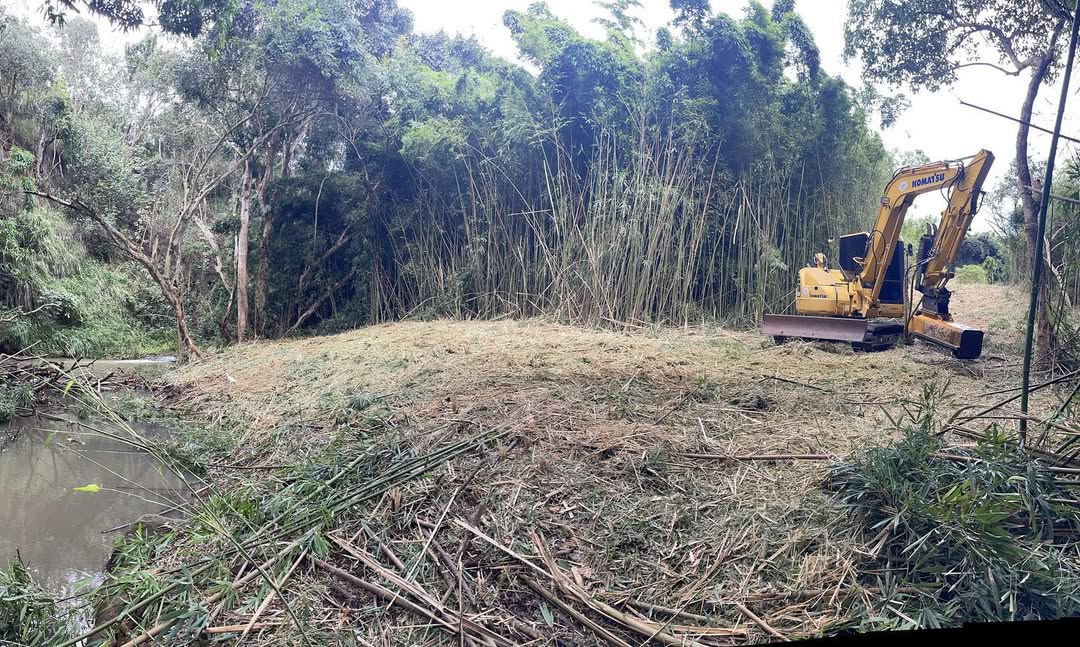
Forestry Mulching (The "Eco-Friendly" Choice): Instead of ripping vegetation out by the roots, our mulcher grinds invasive trees and brush right down to the soil level. This creates a protective layer of mulch that prevents soil erosion while meeting the 4-inch height requirement.
Brush Mowing & Bush Hogging: For the "Zone 2" fuel reduction (30–100ft), we use high-capacity mowers to knock down thick Guinea grass and Haole Koa. This is the most cost-effective way to maintain a large perimeter year-round.
Full Grubbing & Excavation: If your property has decades of unmanaged growth or you are preparing to build, we can provide full soil-to-surface clearing to ensure a 100% noncombustible Zone 0.
Erosion Control & Stabilization: Clearing on Kauai’s slopes requires a plan. We ensure your new firebreak doesn't lead to runoff issues during heavy rains.
Kaua'i Land Management, Fire Compliance & Estate Care
Your Line of Defense Starts Here
Don't let unmanaged overgrowth become a liability. We provide the "heavy iron" solutions Kauai landowners need to protect their families and meet 2026 safety standards.
Resources
Contact Us
Services
Follow Us


© Copyright 2026. Kyani Equipment Services LLC. All Rights Reserved.